The Science of Walking
Did You Know?
Walking is one of the most powerful medicines available — but only if you’re doing it well. Here’s what the science says.
Every Step Counts
You don’t need 10,000 steps
|
1,000
steps at a time
Health benefits increase with every 1,000 steps you add to your day. You don’t have to hit 10,000 to make a difference. |
10–12
minutes of walking
A brisk 10 to 12 minute walk adds 1,000 steps to your day — that’s all it takes to unlock measurable health benefits. |
↓ Age
steps decline with age
It’s not lack of time — older adults often have more free time. Age, illness, and injury change how we walk, making it feel effortful and less enjoyable. |
The Problem
The walking vicious cycle
When gait deteriorates, walking becomes harder. When walking becomes harder, people do less of it. And when people walk less, their gait deteriorates further.
|
Poor gait pattern
|
→
|
Less walking
|
→
|
Gait deteriorates
|
|
↑ cycle repeats ↺
|
||||
Breaking this cycle requires improving gait quality first — not just telling people to walk more.
Why It Matters
Good gait is medicine for your body
Joint & Muscle HealthWalking with a good gait is therapy for your joints and muscles — keeping them flexible and strong. Poor gait leads to muscle imbalances, joint pain, and motivation loss. Every good step is a micro-therapy session. |
Balance & Fall PreventionA steady, balanced gait reduces the risk of tripping, stumbling, and falling. As people age, fall risk increases sharply — and gait quality is one of the strongest predictors. A proper heel-strike pattern improves stability with every step. |
Cardiovascular & MetabolicWalking is a rhythmic, aerobic activity engaging the body’s large muscle groups. As a low-impact exercise, it maintains bone density, supports healthy weight, and reduces the risk of heart disease and diabetes — but only if gait allows you to walk enough. |
|
Our Philosophy Quality before quantityMost walking programs focus on steps. We focus on how you take each step. Walking is a learnable skill. A stooped, shuffling gait can be transformed into an upright, striding one — and when that happens, walking becomes more enjoyable, more beneficial, and easier to sustain. Imagine the compounding benefit of 1,000 good steps, every day. That’s the Walk-BEST™ approach: walk better to walk more.
|
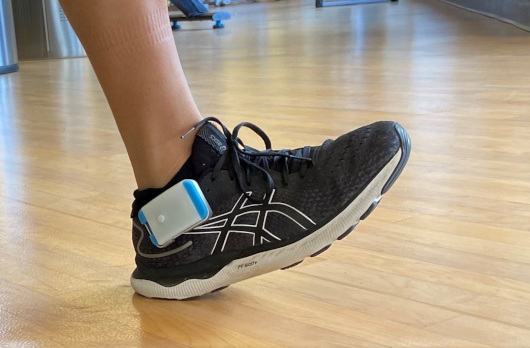
Heel-first contact is the foundation |
|
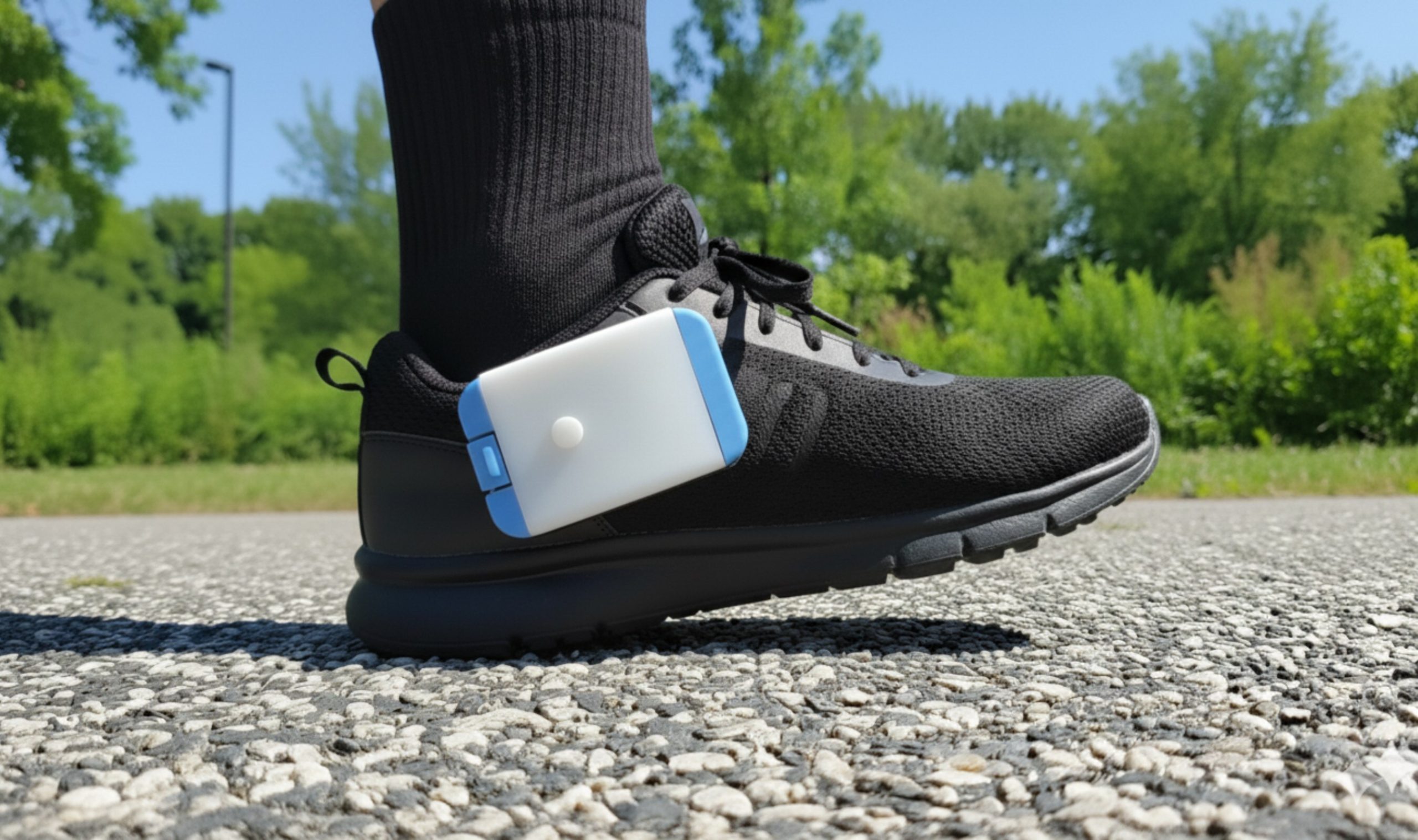
The Walk-BEST™ Solution One beep at a timeThe Heel2Toe™ sensor clips to the side of your shoe and does what a physiotherapist does in clinic — it coaches you to land heel-first with every step. Each correct step triggers a “beep” — a positive auditory reward that reinforces the neural pathways for proper gait. Over time, this imprints a better pattern that becomes natural and lasting. The result: a more upright posture, a longer stride, better foot clearance, and a gait that’s safer, stronger, and more enjoyable.
|
More Ways to Walk BEST
The complete Walk-BEST™ ecosystem
|
📱
Docking Station
Visualize your gait data, track progress, and share reports with your clinician. |
🏃
StepCatcher
Your daily mobility coach — tracks how much you walk and rates each session. |
🦵
Knee Support Band
Proprioceptive feedback to support proper walking mechanics and reduce pain. |
📓
Walk-BEST™ Agenda
Set goals, track daily walks, and celebrate every milestone on your journey. |
Ready to walk your BEST?
Better walking is not about willpower — it’s about the right tools and the right technique. We can help.
|
See All Products → |
Read the Research |
Have a question? Let’s talk.
Tell us what you’re looking for. A member of the team will respond within 1–2 business days.